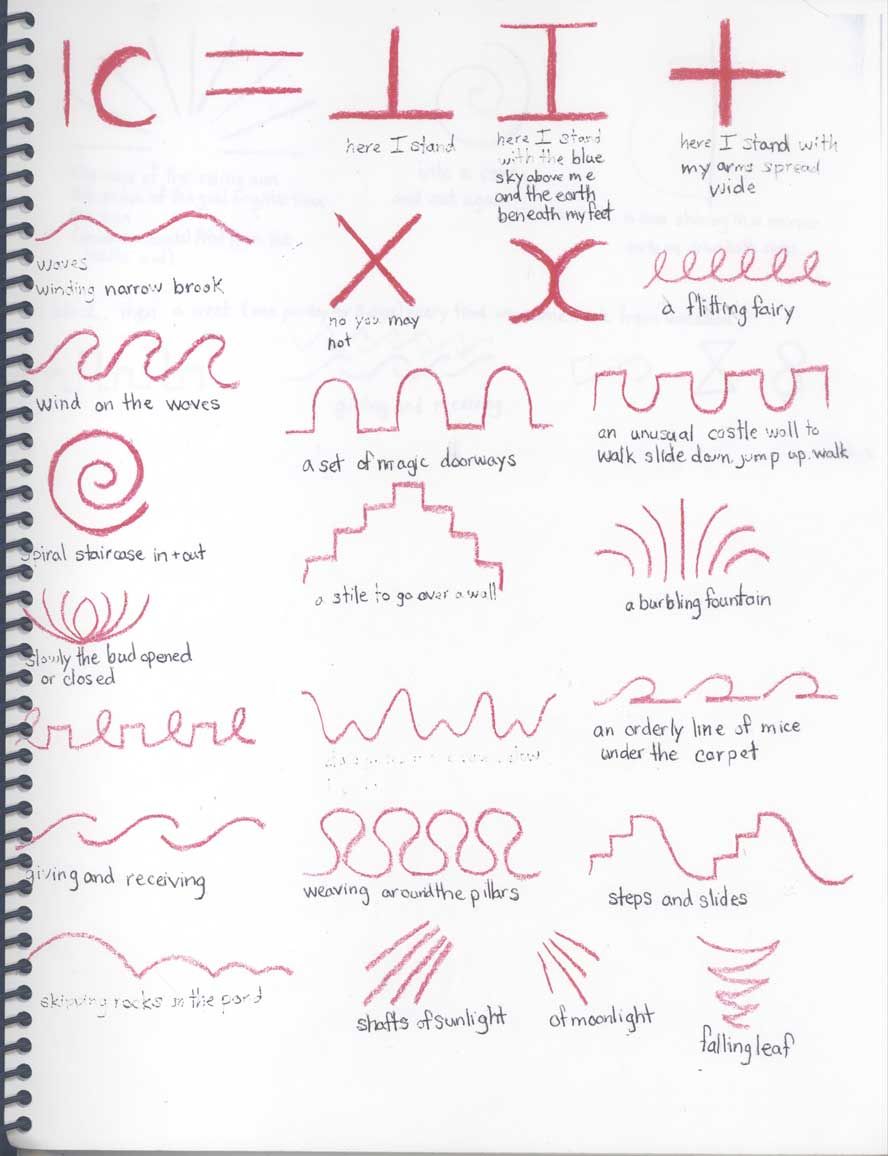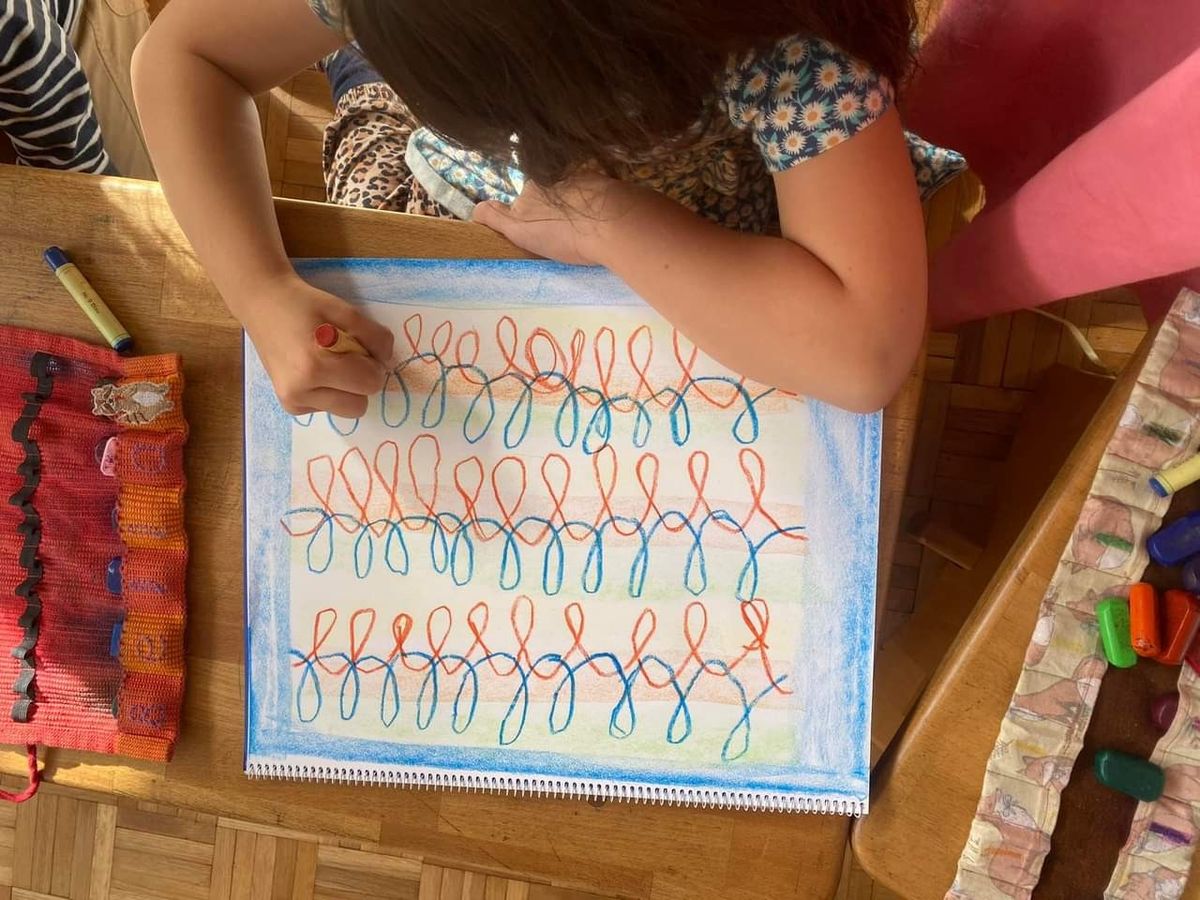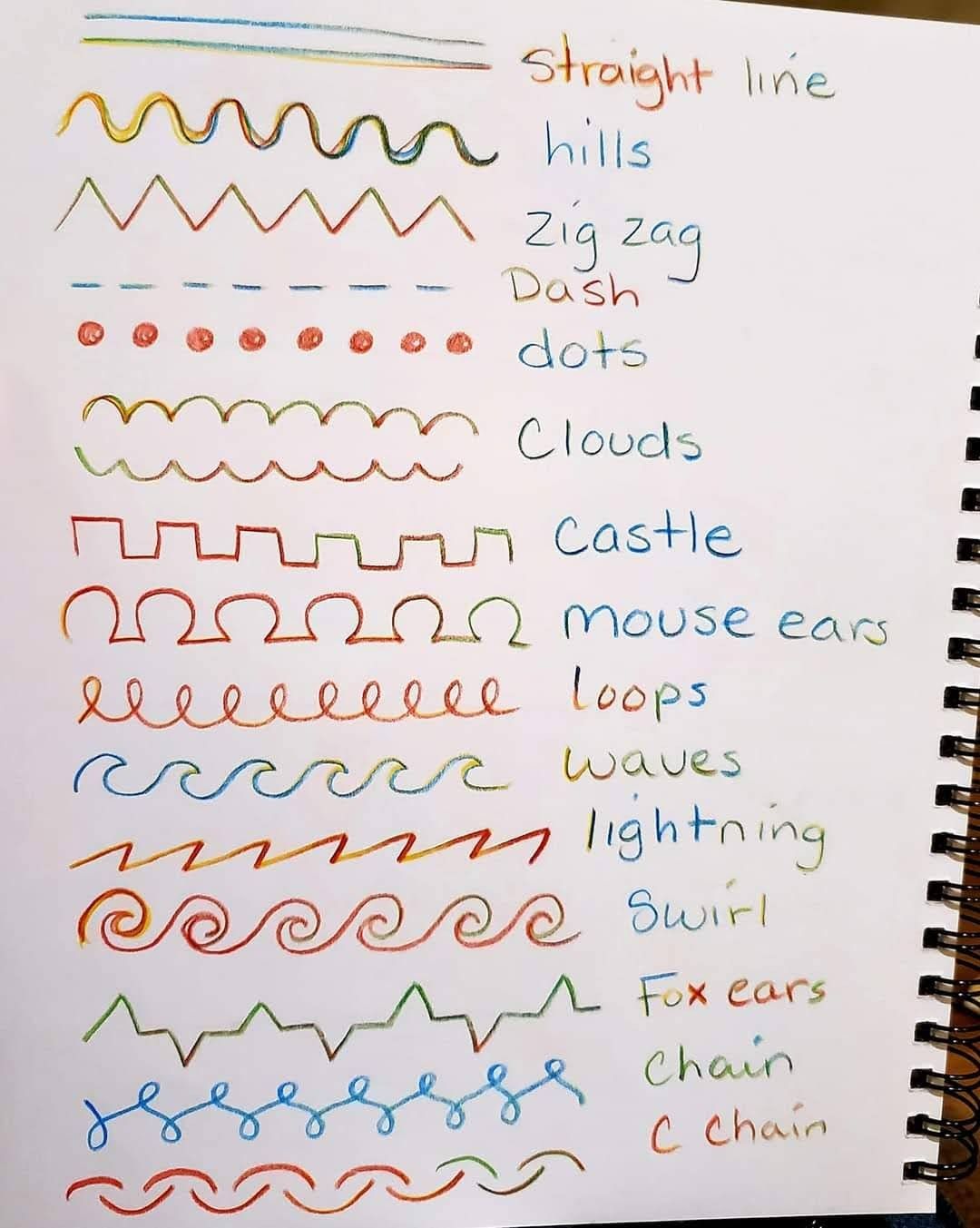
Zeichnen ist viel vielseitiger und kreativer als Schreiben, - und viel einfacher und direkter. Es ermöglicht dem Kind, seine inneren Bewegungen, Vorstellungen und Gefühle auszudrücken und sichtbar zu machen. Schon ein Strich auf Papier verrät uns etwas darüber, was das Kind empfindet: Eine sehr schwache, blasse Linie sagt uns etwas ganz anderes als ein kräftiges, leuchtend orangefarbenes Gekritzel.
Therapeutic drawing combines nonverbal communication with sensory perception and is initially done hand-over-hand: while the child feels the warm and grounding touch of the adult as they guide the crayon hand-over-hand across the paper and watches as it leaves visible, colorful lines. Simple straight and curved lines—the basic elements of writing—are used in slow, predictable rhythms to create an infinite variety of patterns and beautiful motifs. This process connects perception, movement, and thought.
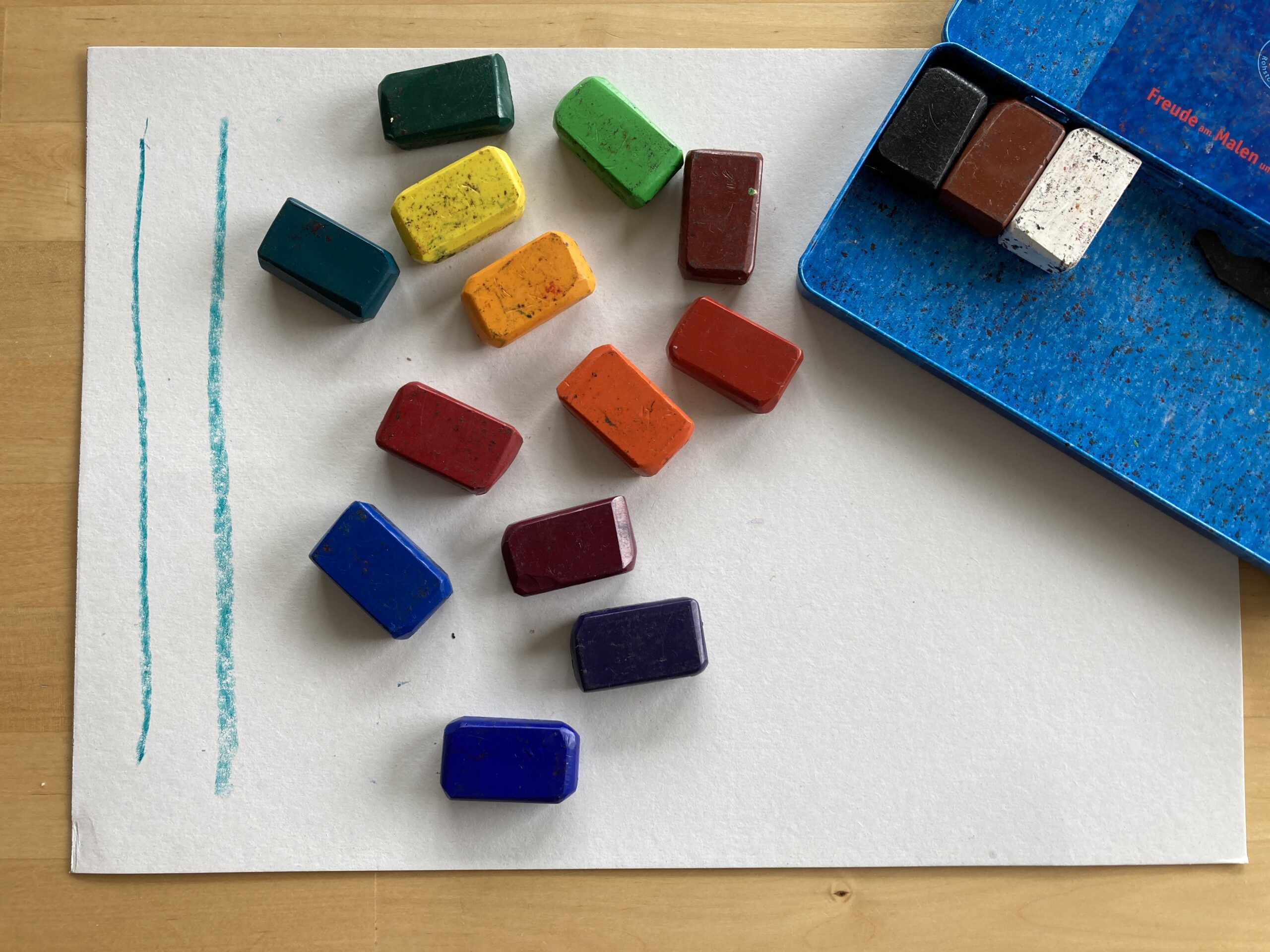
Guided therapeutic drawing is particularly helpful for children who lack motivation, feel aimless, or have autism, as it allows them to experience the grounding effect of the pressure from the wax crayons and the movement of their arm, hand, and fingers as they draw simple, purposeful lines. For adults, this activity is very easy to do, as it requires only a few sheets of paper and 1–2 wax crayons.
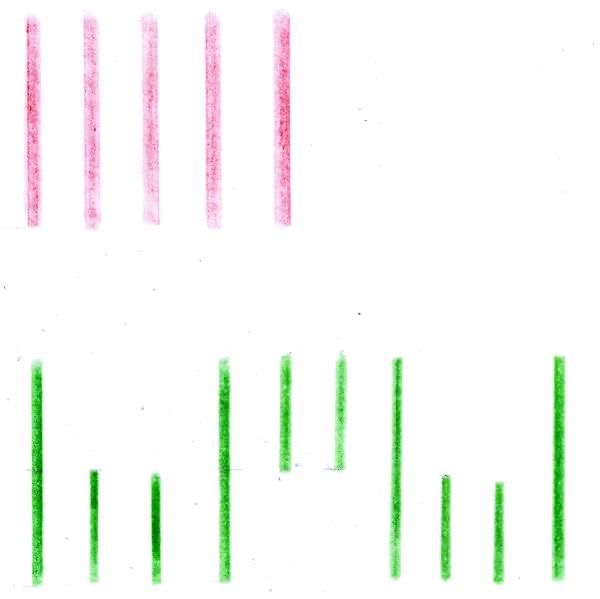
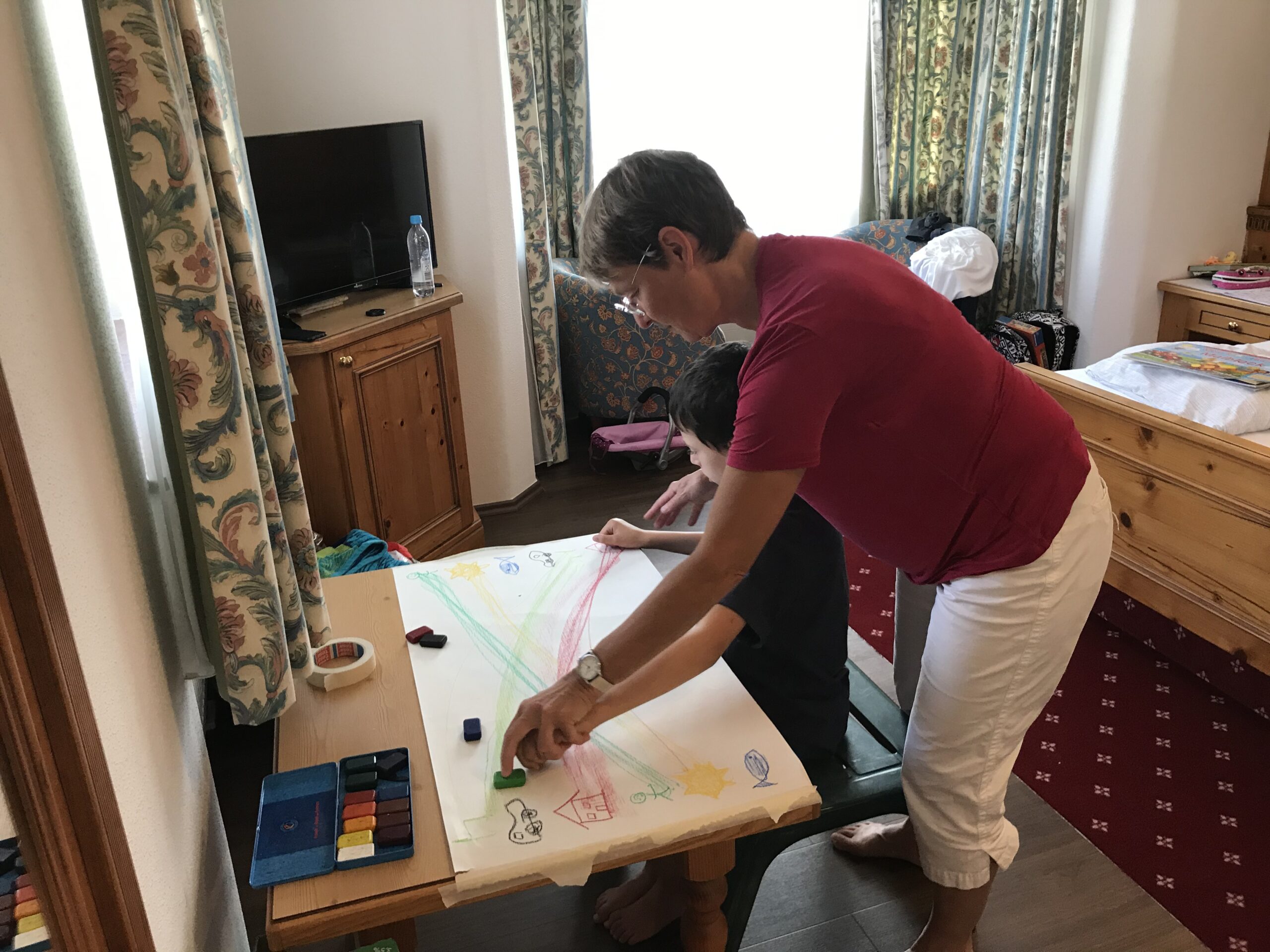
Later on, or with other children, shape drawing can also be used as a standalone activity to develop many basic skills:
- Perceiving and Understanding Shapes: The child learns not only to look at shapes, but also to experience their patterns and forms internally and through the senses.
- Movement and Form: The hand follows a movement that gives rise to a shape. This creates a close connection between perception and motor skills.
- Eye-Hand Coordination: Seeing and feeling, anticipating and planning—these elements work together to guide and control the movement of the hand accordingly.
- Motor Planning: A form requires a sequence of movements, changes in direction, transitions, and a certain amount of advance planning.
- Spatial Orientation: Symmetry, direction, boundaries, inside and outside, and spatial relationships are experienced firsthand.
- Concentration and impulse control: A form should not be performed haphazardly, but rather with care and increasing control.
- From Experience to Thought: The external movement gradually becomes an internal mental image of the shape. In this way, drawing shapes combines motor experience with increasingly abstract thinking.